

Three countries. Six million people. And one of the most advanced digital payments ecosystems on the planet.
When I sat down with Juris Paegle, Visa’s Country Manager for the Baltics, I expected the usual corporate talking points about regional expansion and market potential. What I got instead was a conversation about speed, about trust, and about why a region most people couldn’t locate on a map is becoming one of Visa’s most important proving grounds in Europe.
Paegle doesn’t talk about the Baltics the way most executives talk about small markets. There’s no “despite their size” qualifier. He talks about Estonia, Latvia, and Lithuania as if they’re a competitive weapon. And when you look at what Visa is actually doing in the region, it’s hard to argue with him.
“The Baltics are fundamental to our European strategy,” Paegle says. Not a nice-to-have. Fundamental. And the reason is that this is one of the regions where Visa can move fastest.
Consider the environment. Nearly 80% of payments in Latvia are cashless. Estonia has built one of the most digitised public infrastructures in the world. Lithuania has become one fo the EU’s largest fintech hubs by number of licensed companies. The population is technically literate, the regulators are responsive, and the ecosystem participants actually talk to each other. For a company like Visa, that combination is gold.
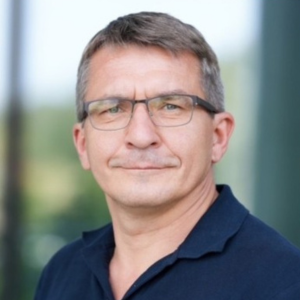
“When a Baltic company decides to partner with Visa and plug into Visa’s rails, they don’t just get payment processing. They get access to a Global network,”
Juris Paegle, Visa’s Country Manager for the Baltics
Paegle describes the region as a live sandbox. A live production environment where new products are built to scale from day one. What Visa tests in the Baltics isn’t a prototype that gets rebuilt for larger markets. It’s the real thing, stress-tested in a region where adoption happens fast because the infrastructure and the consumers are ready for it.
And the results speak for themselves. In 2026, Visa launched the Visa Innovation Program Europe for the Nordics and Baltics, selecting eight high-potential fintechs for its inaugural cohort. Two of them are Baltic: Beneflo, a Latvian employee benefits platform operating on Visa rails, and Juuli, an Estonian AI-powered banking platform for freelancers. The programme culminates at Baltic Fintech Days in Riga this May, where participants will showcase their results to regional investors, banks, and Visa executives. This isn’t charity. This is Visa identifying where the next wave of payments innovation is coming from and positioning itself at the centre of it.
Last chance: Get your tickets for Baltic Fintech Days May 13
But the real story here is bigger than any single programme. Visa isn’t the same company it was ten years ago. It’s not a card company anymore. Through acquisitions like Tink, the Swedish open banking platform Visa acquired for 1.8 billion euros in 2022, and Pismo, the Brazilian cloud-native core banking platform it bought for a billion dollars in 2024, Visa has transformed itself into a network that touches every layer of financial services. Cybersecurity. Fraud prevention. Embedded finance. Core banking infrastructure. Open banking. The card rails are still there, but they’re now just one part of a much larger picture.
Paegle makes this point with a specific example. When a Baltic company decides to partner with Visa and plug into Visa’s rails, they don’t just get payment processing. They get access to a global network that can connect them with technology and capabilities from London, Stockholm, or San Francisco. Whatever that company needs, wherever the service exists, Visa’s scale and presence can provide a direct line to it. For a startup in Tallinn or a bank in Riga, that kind of connectivity changes the equation entirely.
This is where the collaborative nature of the Baltic ecosystem becomes a real differentiator. Paegle talks about regulators in the region the way most fintech executives wish they could talk about regulators everywhere. They’re open. They’re fast. They want companies to succeed. But they’re also serious about security and compliance. The result is an environment where new products can move from concept to market without the grinding bureaucratic friction that slows things down in larger European markets.
Last chance: Get your tickets for Baltic Fintech Days May 13
And Visa isn’t just building financial infrastructure here. It’s investing in the ecosystem itself. The She’s Next programme, run in partnership with Luminor and Novatore, has been supporting women entrepreneurs across the Baltics for three consecutive years, providing grants of 10,000 euros each along with coaching and visibility. Visa has also been supporting Latvian Olympic athletes through its global Team Visa programme, something Paegle mentions with visible pride. These are Visa’s long-term commitment to the region, showing the Baltics as a place worth building relationships in.
When I asked Paegle what Visa gets from the Baltics that it can’t get elsewhere, his answer was immediate. Speed. The ability to fast-test, iterate, optimise, and produce scale-ready solutions for international deployment. He said the technical talent is world-class, pointing to Estonia’s TalTech and Tartu universities producing exceptional technology graduates, and to Vilnius developing deep expertise in financial services and regulatory knowledge.
Latvia, he acknowledges, has been a step behind its neighbours. But Paegle sees that as an advantage now. Latvia has watched Estonia and Lithuania go through the trial and error of building fintech ecosystems, and it’s learned from both the successes and the mistakes. The country is now accelerating its digital strategy and attracting international companies looking for a launch pad into the EU market. It’s fast-tracking without the growing pains.
The biometrics story is worth watching too. Paegle sees palm and biometric payments emerging in the region soon, and the evidence is already there. Handwave, a Riga-based startup, raised 3.6 million euros in 2025 and signed an agreement with Visa to integrate its palm recognition technology into Visa’s Token Management Service. The technology uses dual imaging to capture surface lines and subdermal vein patterns, creating an encrypted biometric ID that can’t be spoofed. A Latvian company building the future of payments authentication, working directly with Visa’s global infrastructure. That’s the ecosystem producing exactly the kind of innovation Paegle is talking about.
Last chance: Get your tickets for Baltic Fintech Days May 13
Looking at the next twelve to twenty-four months, Paegle has a clear set of priorities. Deepen the partnerships with Baltic fintechs and banks. Expand the capabilities that acquisitions like Tink and Pismo have brought into the Visa network. Continue positioning the Baltics as a testing ground for solutions that can scale across Europe and beyond. And keep investing in the talent and entrepreneurship that make the region tick.
The Baltics won’t become the largest payments market in Europe. That’s obvious. But size was never the point. What makes this region matter to Visa, and what should make it matter to anyone paying attention to where financial services are heading, is the speed at which ideas become products here, and the quality of what comes out the other side. Three countries, six million people, and a payments ecosystem that the rest of Europe is quietly learning from.
That’s not small-market energy. That’s the future being built at a pace that larger markets often struggle to match.